The Lemosho Route is widely regarded as one of the most scenic, best-acclimatized, and professionally recommended routes for climbing Mount Kilimanjaro. Approaching the mountain from the remote western side, the Lemosho Route offers a gradual ascent through diverse ecosystems before joining the Southern Circuit toward the summit.
Operated professionally by Kilimanjaro Mountaineers, the Lemosho Route combines wilderness immersion, strong acclimatization, and high summit success rates, making it a top choice for both first-time climbers and experienced trekkers.
The Lemosho Route begins on the western slopes of Mount Kilimanjaro, far from the busier southeastern routes. Access is via Londorossi Gate, following a remote track through pristine forest and open glades before reaching Mti Mkubwa (Big Tree) Camp.
This western approach allows climbers to experience less traffic, broader landscapes, and a more natural altitude progression, which is why Kilimanjaro Mountaineers strongly recommends it for climbers focused on safety and success.
The Lemosho Route is unique in that it traverses nearly every ecological zone on Kilimanjaro, offering a true cross-section of the mountain.
Dense, moss-covered forest with giant trees, birds, and colobus monkeys.
Open slopes with giant lobelias, heather, and wide mountain views.
A vast high-altitude plateau formed by an ancient volcanic caldera.
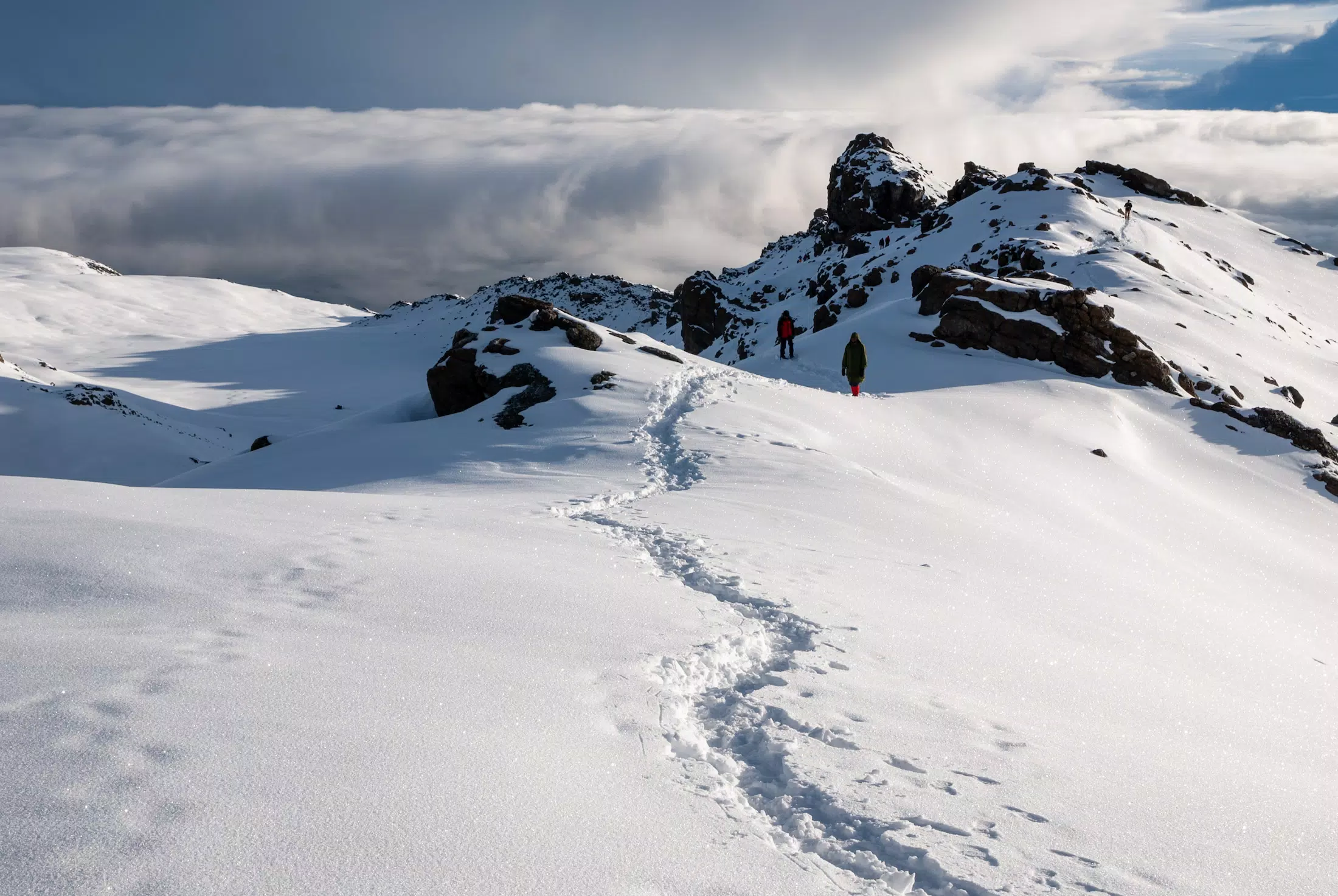
Stark, rocky terrain with minimal vegetation and dramatic skies.
Glaciers, ice fields, and volcanic scree leading to Uhuru Peak.
Unlike other Kilimanjaro routes, the Lemosho Route passes through true wilderness corridors, especially in the early days. Kilimanjaro Mountaineers' guides are trained to interpret these ecosystems, adding educational value to the climb.
Because the Lemosho Route starts on the western side, it often receives slightly less rainfall than eastern routes, an advantage highlighted by Kilimanjaro Mountaineers when planning climbs.
January to March: Cooler, quieter, occasional snow at the summit
June to October: Stable weather, clear skies, peak climbing season
April–May: Heavy rains, slippery forest trails
November: Short rains, still climbable with preparation
The Lemosho Route is considered one of the highest-success routes on Kilimanjaro due to its design and professional pacing. This makes it particularly suitable for climbers who prioritize safety, comfort, and success over speed.
A standard 7-Day Lemosho Route with Kilimanjaro Mountaineers follows this structure. Each day is designed to balance distance, elevation gain, and recovery, under the supervision of Kilimanjaro Mountaineers' certified guides.
Kilimanjaro Mountaineers often recommends Lemosho over faster routes such as Umbwe or Marangu for clients prioritizing safety.
The Lemosho Route is a fully supported camping route. This support system is a major contributor to comfort and success at altitude.
Kilimanjaro Mountaineers follows strict safety protocols on the Lemosho Route. The Lemosho Route's design supports these safety systems better than shorter or steeper routes.
This is why Kilimanjaro Mountaineers frequently positions Lemosho as the gold standard route.
Less crowded at the start
More gradual acclimatization
Better altitude profile
Camping instead of huts
Higher success rates
Safer and less aggressive ascent
Kilimanjaro Mountaineers provides a detailed packing list and pre-climb briefing.
Kilimanjaro Mountaineers is a Tanzania-based safari operator and Destination Management Company (DMC), offering expertly planned Kilimanjaro Mountain Climbing Expeditions. By booking directly with a local operator, clients benefit from accurate local pricing, real-time destination knowledge, and reliable on-ground support throughout their journey.
We also specialize exclusively in Tanzania safaris, including Serengeti, Ngorongoro, Tarangire, Lake Manyara, and Zanzibar beach holidays via www.safari-tz.com. All tours are operated with professional local guides, well-maintained 4×4 safari vehicles, and carefully selected accommodations to ensure comfort, safety, and an authentic safari experience.
Our focus is to deliver honest, well-organized, and memorable safari, trek and beach experiences, making Kilimanjaro Mountaineers and Safari-TZ.com a trusted choice for travelers planning a safari in Tanzania.